In Crono sequences, each Email or LinkedIn step can be fully automated by clicking the "Auto" button on that step. Crono then sends the email or performs the LinkedIn action at the scheduled time, with no action from you.
Automated actions follow strict pacing and safety rules, designed to mimic human behaviour and protect your email deliverability, your LinkedIn account health and your sender reputation.
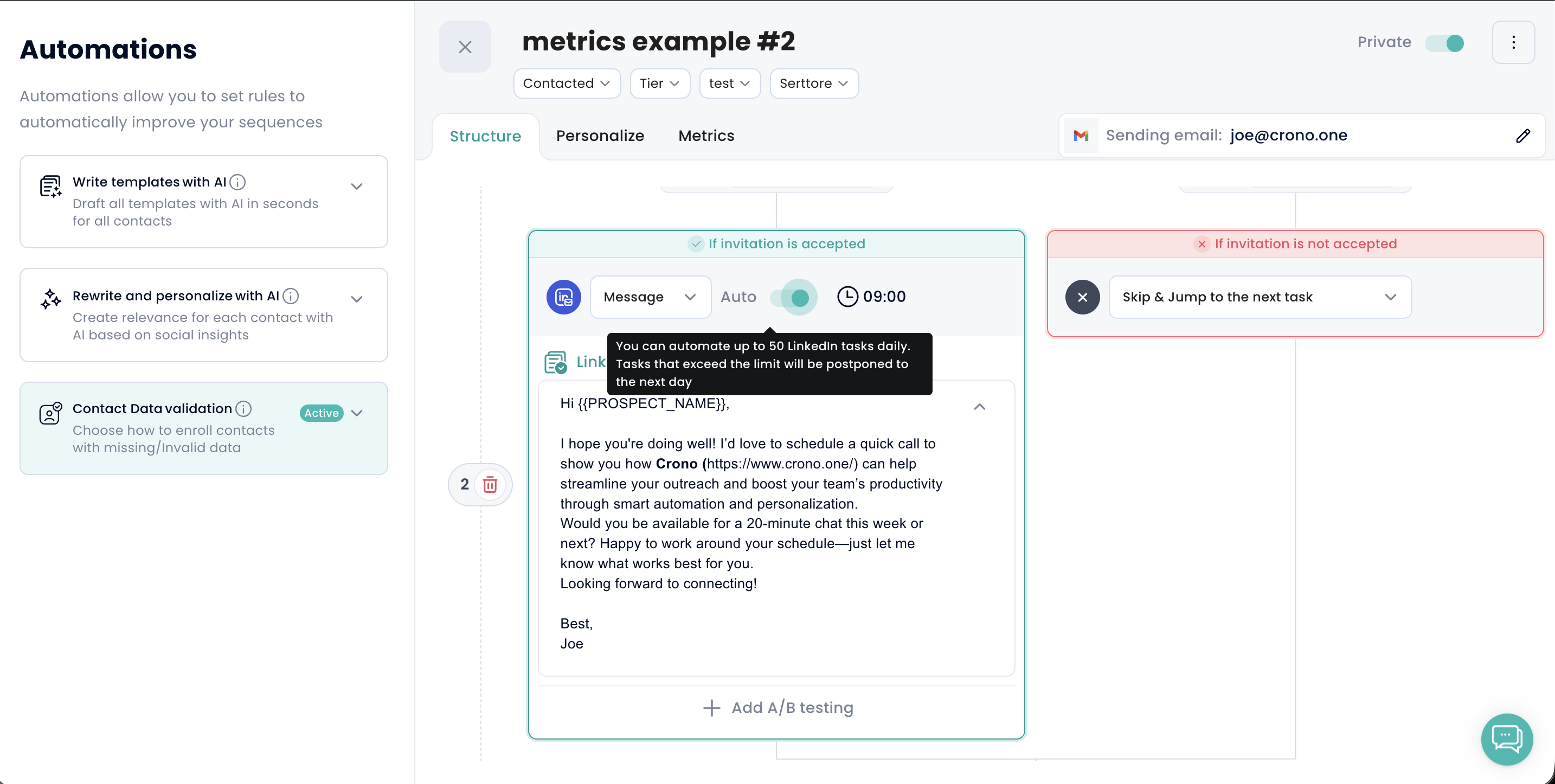
Standard LinkedIn accounts: up to 50 automated LinkedIn tasks per day
Sales Navigator users: up to 100 automated tasks per day
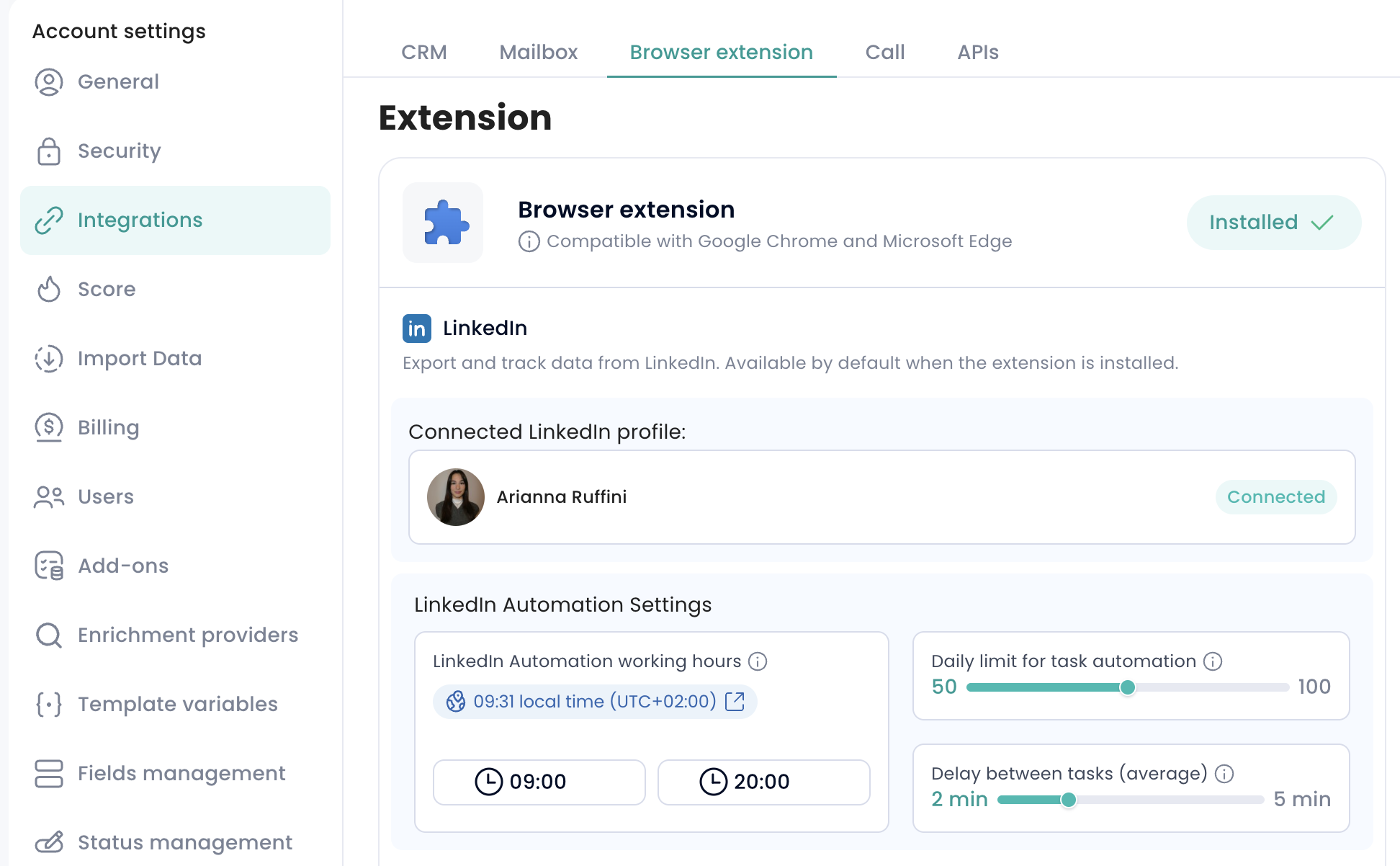
LinkedIn tasks include connection requests, direct messages and InMails (Sales Navigator only).
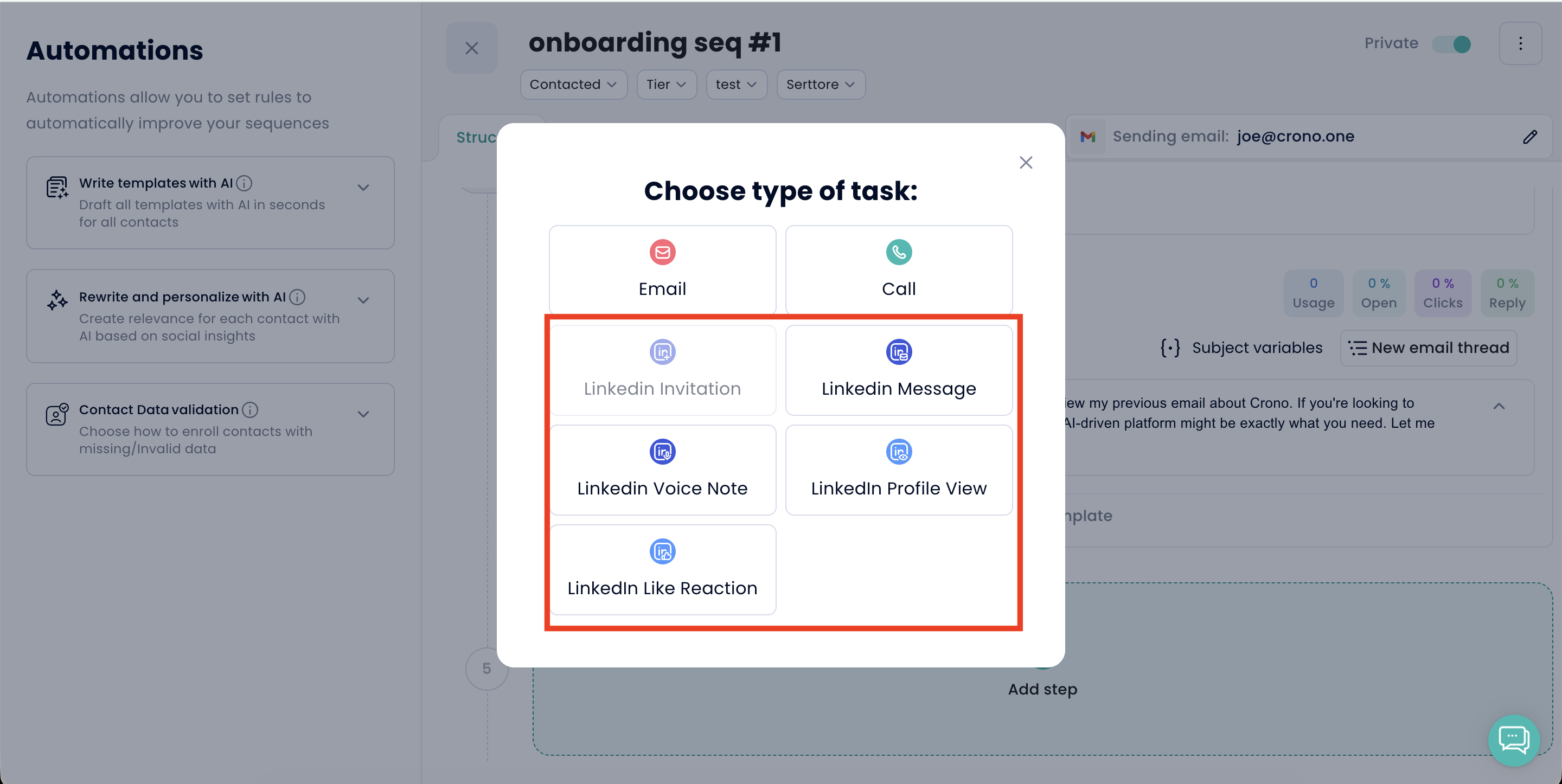
Sales Navigator users enable the higher daily limit in Account Settings → Integrations → Browser Extension.
⚠ Open Crono and LinkedIn every day to refresh your LinkedIn session. Without a live session the browser extension cannot start, and LinkedIn automation will not run that day. This is the single most common reason a LinkedIn task does not fire.
If you want Crono to perform fewer LinkedIn actions than the default, you can lower the daily limit or increase the average delay between actions in the same place: Account Settings → Integrations → Browser Extension.
With no custom configuration, automated email sending works like this:
5 seconds between each automated email
A maximum of 40 emails per user per batch
Batches run every 5 minutes, so the system's ceiling is 40 × 12 = 480 emails per user per hour
That 480 is the technical ceiling of the sending engine, not a target. In practice what you send is governed by your own mailbox daily limit, below — and for deliverability you should stay well under it.
When a sequence step is scheduled for a given hour — say 9:00 AM — Crono does not fire every task at 9:00 sharp. It spreads them out:
Execution begins at 9:00
Tasks are progressively spaced across the sending window
Nothing is ever sent as a burst
This applies to email, LinkedIn connection requests, messages and InMails alike.
If there are more tasks than the window allows, the remainder are postponed automatically and rescheduled for the same time the following day. They are not lost.
Crono does not offer manual randomisation controls — no time-range selection, no random delay configuration, no variability settings. The human-like distribution above is applied automatically, which keeps things simple and removes the risk of misconfiguring it.
You can configure sending limits for each connected mailbox under Account Settings → Integrations → Mailbox. These are the settings that actually shape your sending.
Daily limit (inbox limit) — the maximum number of emails that mailbox can send per day. Configurable from 1 to 1000. This is the ceiling that matters day to day.
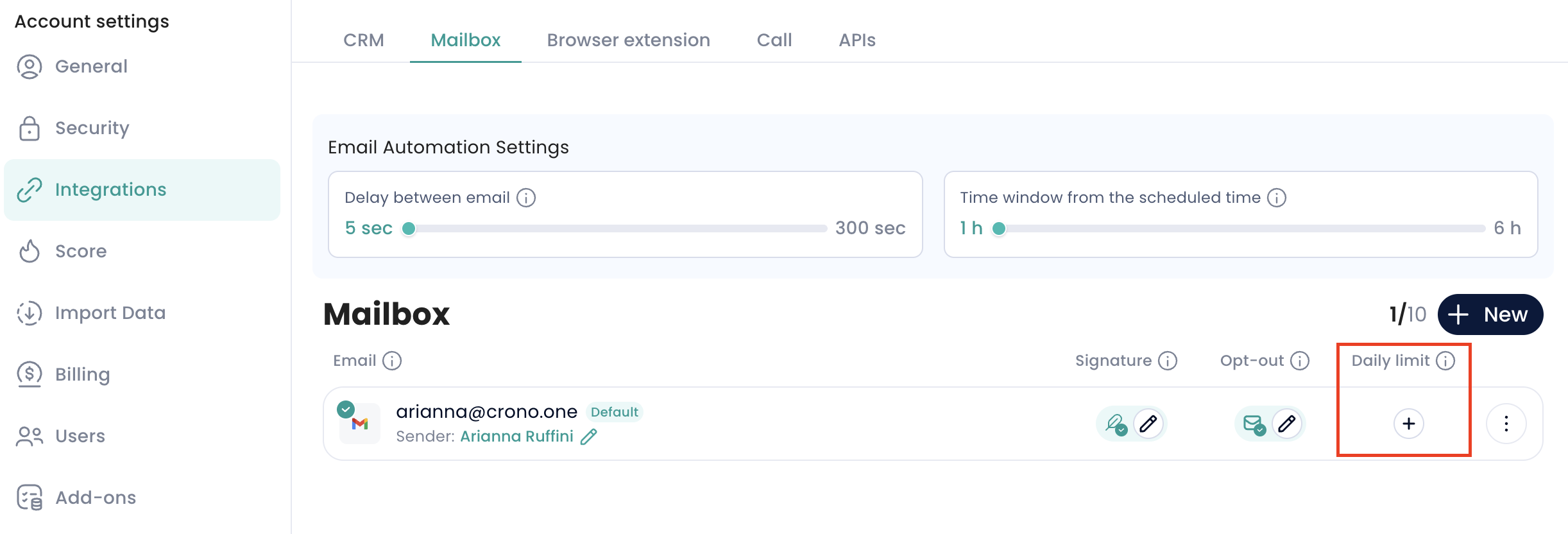
Delay between emails — the average wait between one automated email and the next. Configurable from 5 to 300 seconds.
Time window (from scheduled time) — how long a window Crono has to spread the emails across, starting from the step's scheduled time. Configurable from 1 to 8 hours, and set to 1 hour by default.
This is the setting behind the spreading described above. With the default of 1 hour, a step scheduled for 9:00 is distributed between 9:00 and 10:00. Widen it to 8 hours and the same tasks are spread across a much longer stretch of the day, which looks more natural and is gentler on deliverability.
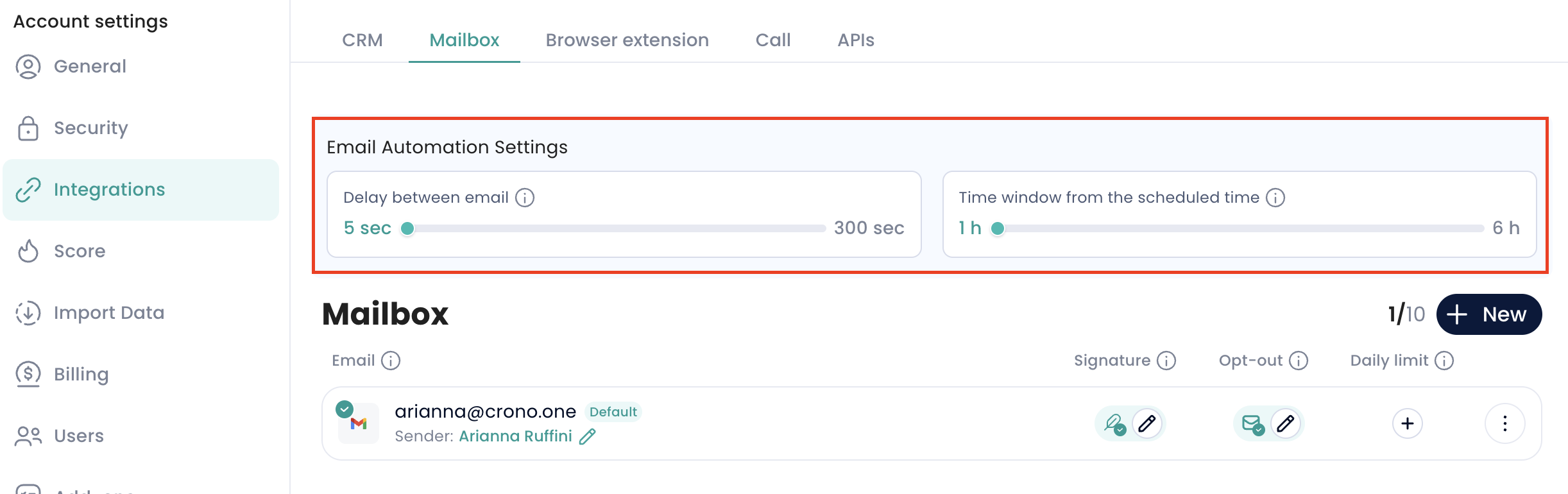
Together these three settings help you keep a healthy sender reputation, stay clear of spam filters and provider limits, and deliver more reliably.
If a task was due and nothing was sent, see A task did not run: what to check.
